
At the TWA Hotel's Paris Café, celebrated chef Jean-Georges Vongerichten brings an upscale touch to airport dining. The food delivers. The bill is another matter.

There are few places where the laws of ordinary economics seem to collapse quite as spectacularly as an airport.
A bottle of water becomes a luxury item. A sandwich suddenly costs as much as a proper lunch elsewhere. And a cheeseburger, that great American symbol of affordable, uncomplicated satisfaction, can somehow find itself commanding $34.
Welcome to John F. Kennedy International Airport.
More specifically, welcome to Paris Café, the restaurant associated with celebrated chef Jean-Georges Vongerichten inside the TWA Hotel.
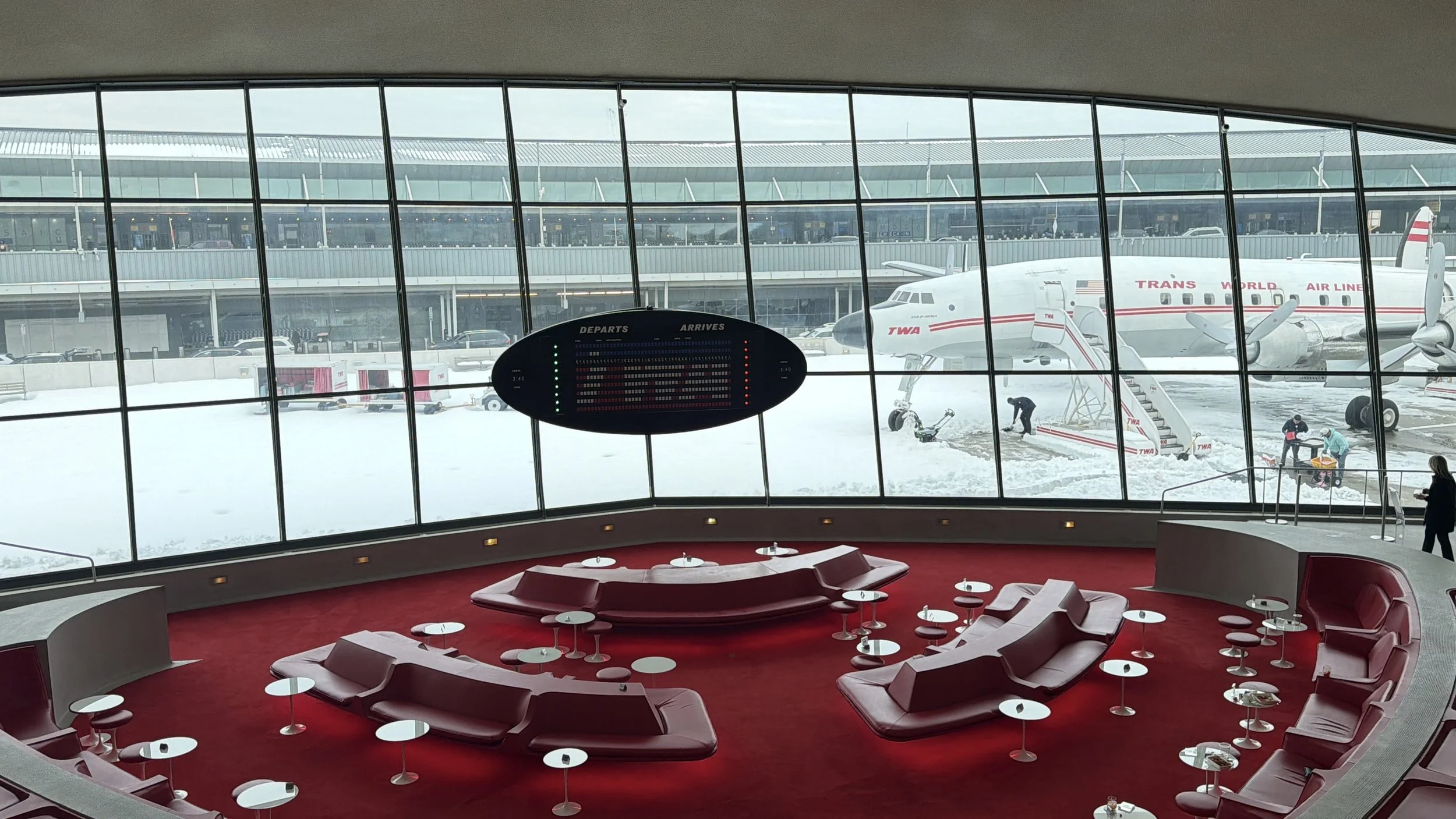
It's an unusual place to have dinner. Outside, aircraft from around the world come and go. Inside, the former TWA Flight Center celebrates an era when commercial aviation was glamorous, airlines had personalities, and passengers were apparently expected to dress as though they were attending a wedding.
Naturally, this seemed like an appropriate setting to order a cheeseburger.
An expensive one.
Dinner in the Jet Age
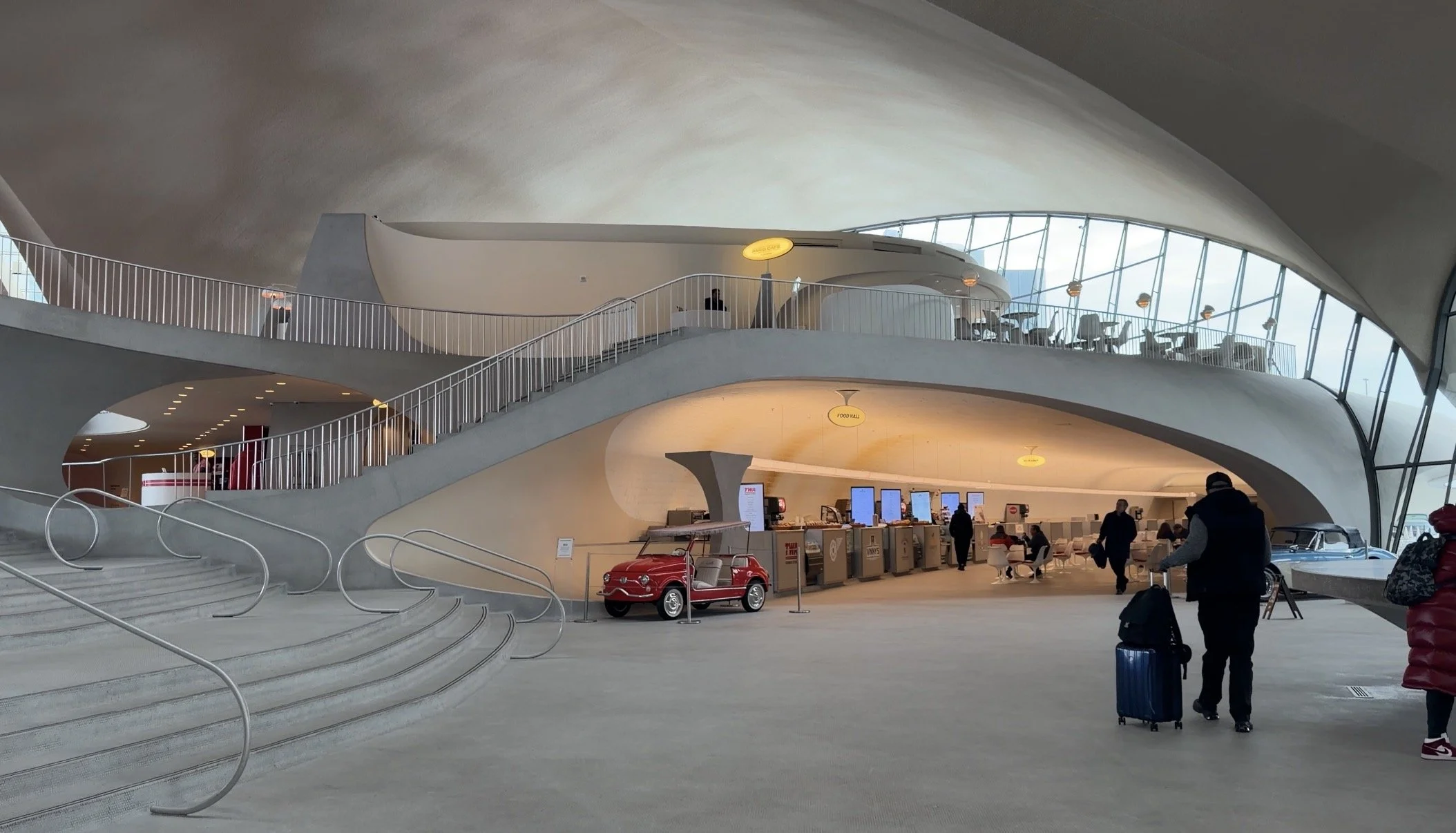
The TWA Hotel is built around Eero Saarinen's remarkable former TWA terminal, a sweeping architectural tribute to the optimism of the early 1960s.
The building is a monument to an America that believed the future would arrive in the form of jet engines, modernist furniture, and increasingly ambitious concrete structures.
Paris Café operates within that world of carefully preserved nostalgia.
And unlike the usual airport dining experience, this is somewhere guests can deliberately choose to spend an evening rather than simply tolerate a meal between flights.
There are no boarding announcements demanding immediate attention. No need to eat with a carry-on bag wedged between your legs.
At least, not unless you've brought one along voluntarily.
The restaurant's association with Jean-Georges raises expectations. This is a chef whose career has been built on sophisticated cooking, international influences, and a substantial reputation in New York's restaurant world.
The question, then, is whether that culinary pedigree translates into a satisfying meal inside an airport hotel.
And whether the price of admission is justified.
Meatballs Before the Main Event
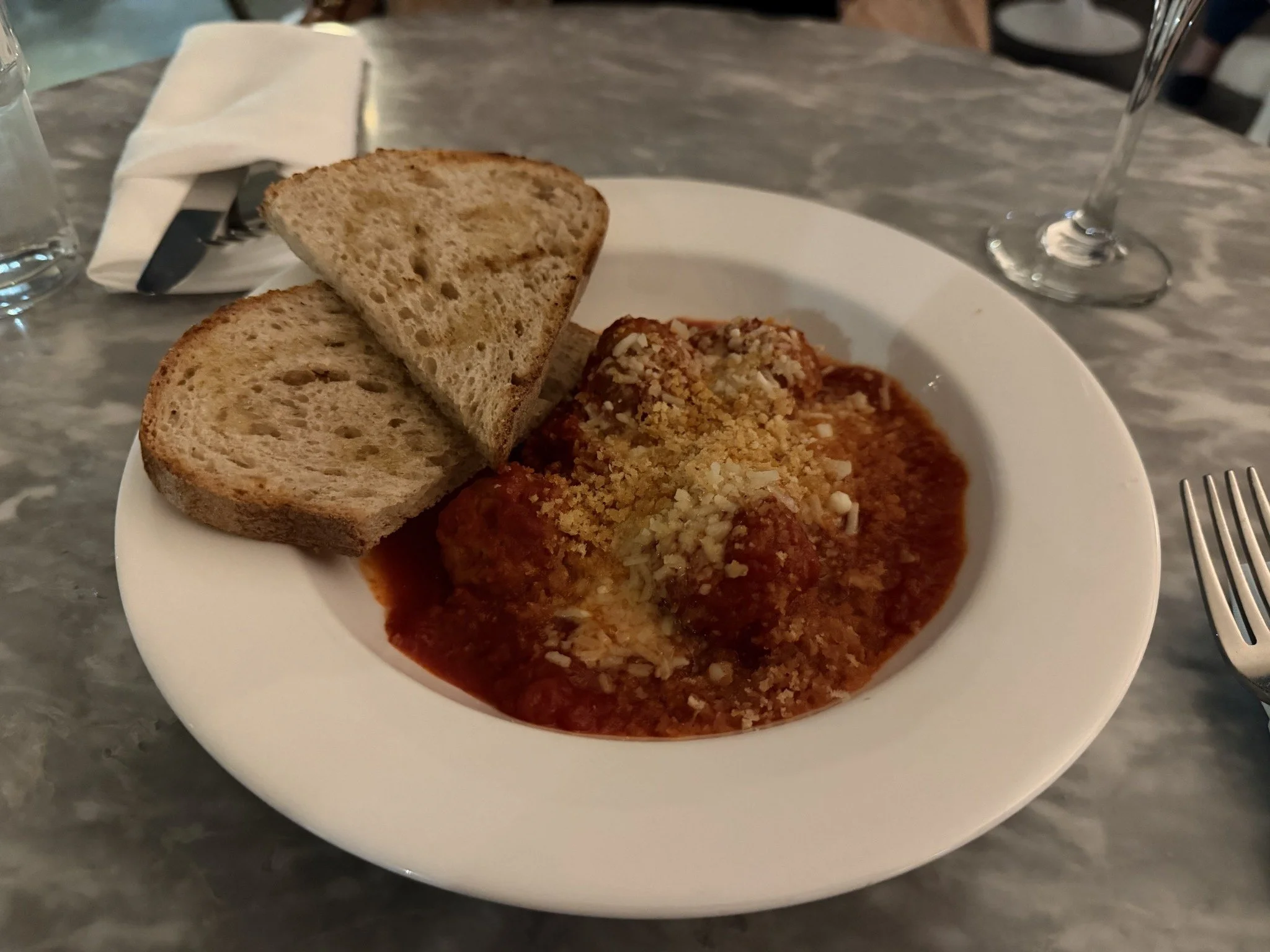
Dinner began with meatballs served in a smoked chili tomato ragù, finished with Parmesan cheese and accompanied by grilled sourdough bread.
It was a comforting choice, familiar enough to appeal to almost anyone but with a little more ambition than the average plate of meatballs.
The smoked chili tomato ragù introduced a more interesting dimension to a dish that could otherwise have been fairly predictable.
Parmesan provided the familiar salty finish, while the grilled sourdough made practical sense alongside a tomato-based sauce.
This is the sort of food that suits the setting.
There is something distinctly American about an Italian-inspired comfort dish served inside a former airline terminal, overseen by a French-born chef, at an airport where international travelers pass through every day.
A small culinary representation of New York, perhaps.
Or simply a good excuse to order meatballs.
The $34 Question
There are few foods more closely associated with American dining than the cheeseburger.
It is a wonderfully democratic invention.
A cheeseburger can be eaten at a roadside diner, a neighborhood bar, a baseball stadium, or an expensive restaurant determined to convince customers that ground beef deserves a tasting menu.
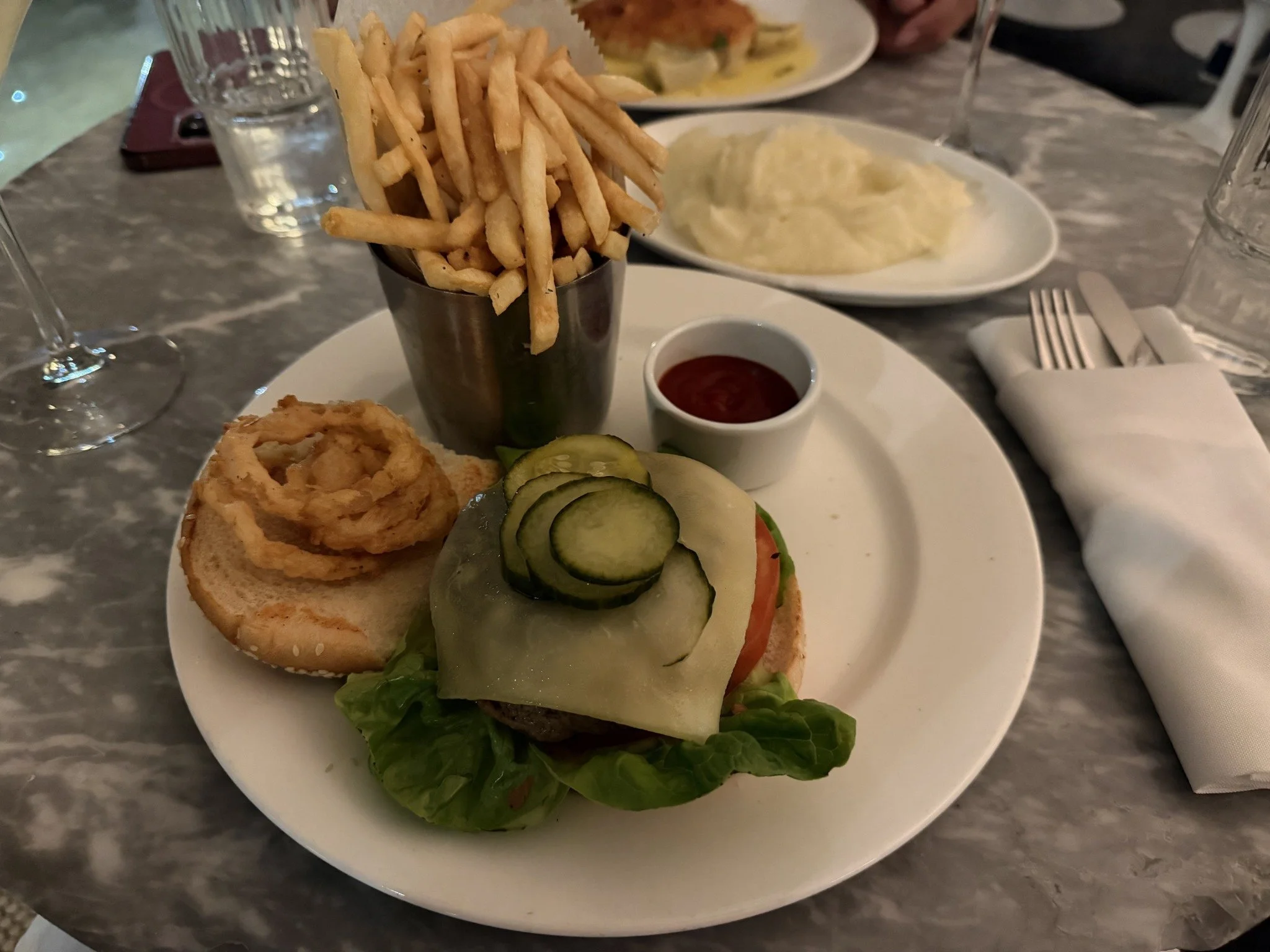
At Paris Café, the cheddar cheeseburger came with yuzu pickles, frizzled onions, and crispy French fries.
And the price?
Thirty-four dollars.
For a cheeseburger.
To be fair, it was fantastic.
The burger delivered on the most important requirement of any expensive restaurant dish: it tasted good. The cheddar, pickles, onions, and bun made for a satisfying combination, with the fries providing the obligatory accompaniment.
There was nothing fundamentally wrong with the food.
The problem was the economics.
At $34, a cheeseburger stops being a casual meal and becomes a purchase that requires at least a moment of financial reflection.
Is any cheeseburger worth that much?
Perhaps, under the right circumstances.
The Captive Audience Problem
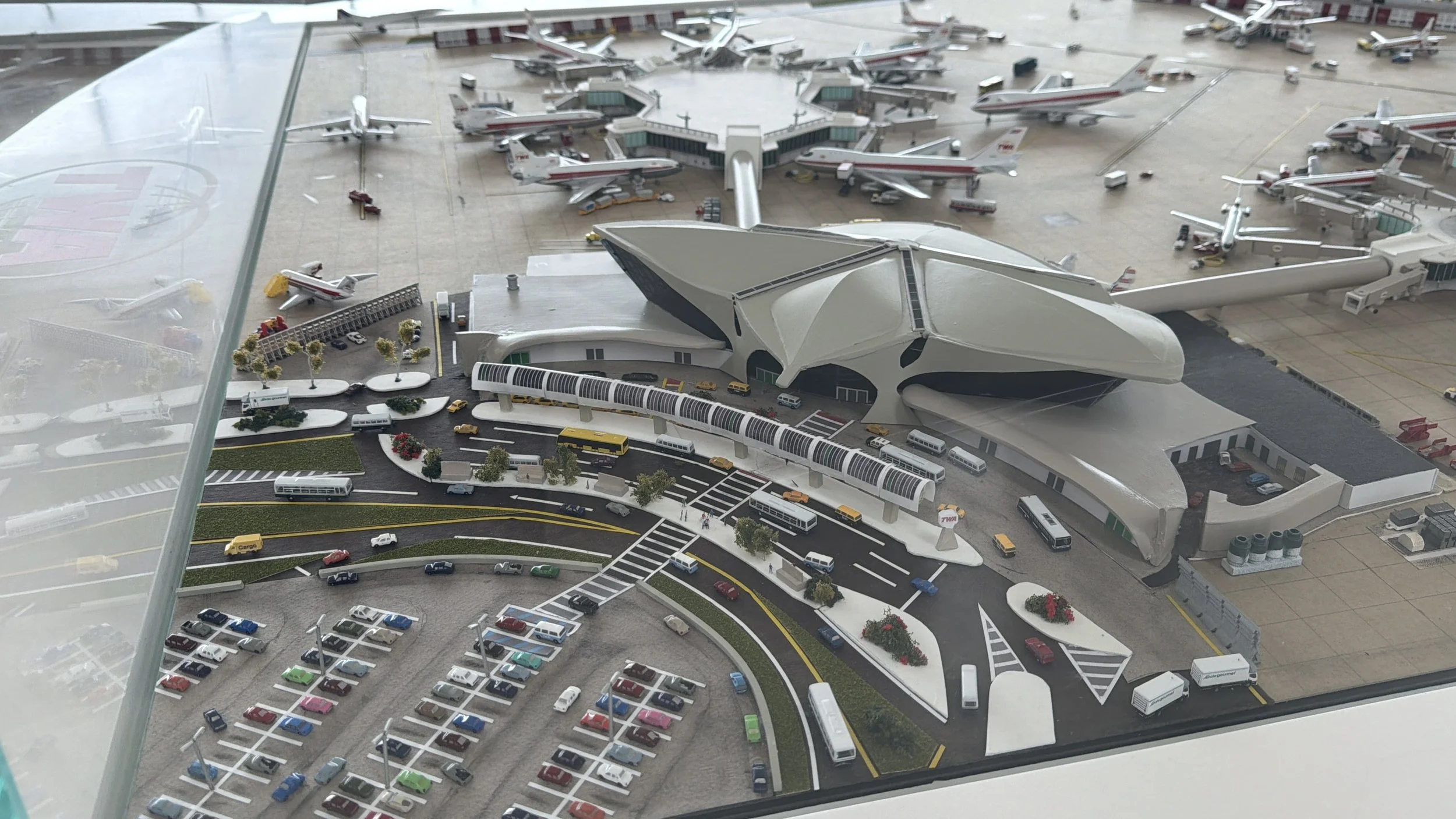
The difficulty with airport dining is that competition operates differently when the customer has limited alternatives.
At an ordinary restaurant, an expensive menu presents a simple choice: eat somewhere else.
At an airport, that decision becomes considerably more complicated.
During this stay, leaving the hotel to find another meal would have meant venturing into the airport's secure terminal environment, with all the inconvenience that entails and side-eyeing from the TSA agents when they realize you’re simply there for dinner.
There were dining options elsewhere at JFK, certainly.
But clearing airport security simply to eat dinner was not a particularly appealing prospect, nor a practical option without the appropriate access.
The alternative was to remain at the hotel.
And suddenly, a $34 cheeseburger began to seem like the path of least resistance.
This is the peculiar reality of airport hospitality.
Location commands a premium, operational costs are different, and convenience becomes part of what customers are paying for.
Some of that premium is understandable.
But understanding why something is expensive does not necessarily make it good value.
The burger was excellent.
It was also overpriced.
Both things can be true.
A Good Dinner, With an Airport-Sized Bill
Paris Café is not a bad restaurant hiding behind a famous chef's name.
The food experienced during this visit was enjoyable, from the meatballs and their smoked chili tomato ragù to a genuinely satisfying cheeseburger.
But there is a difference between recommending a meal and recommending its price.
The restaurant makes considerable sense for guests staying at the TWA Hotel, particularly those who want to enjoy the historic property without leaving for dinner.
It also offers something more distinctive than the anonymous dining options found throughout many airport terminals.
Still, the location imposes its own economics.
Thirty-four dollars for a cheeseburger is difficult to defend on culinary grounds alone, however good that cheeseburger might be.
Ultimately, Paris Café delivers an experience that is almost perfectly suited to its surroundings.
A celebrated chef. A historic airline terminal. Familiar American comfort food with a more sophisticated touch.
And a bill that reminds you, rather abruptly, that you're still at JFK.